
Lloyd George Society Weekend 2026 – A Meeting Report
The weekend of 6 March 2026 signalled a change in the Lloyd George Society. For the first time in many years, we held our meeting at a new venue – the Lake Country House Hotel & Spa in Llangammarch Wells.
The venue change reinvigorated the Weekend school.
First of all, the accommodation was a marked change, spacious and luxurious in feeling. The food was outstanding throughout, with the staff being beyond compare. From conversations that I had with the other members, I noted that they were very positive about these aspects of the weekend. Also, as an added bonus, those attending could take advantage of some of the spa facilities – the swimming pool, steam room, sauna and jacuzzi. I think our Chair, Russell Deacon, and Treasurer, Peter Chapman, chose an outstanding venue that was really appreciated by the membership and speakers.
For those of us who arrived on Friday night, we started with an informal meal and a good catch-up with friends that we had not seen since the 2025 meeting.
Saturday
The next day, the formal part of the school began with our President, Lord Martin Thomas of Gresford, welcoming everyone to the weekend. As usual, Martin entertained and regaled us with stories of past Lloyd George Society Weekends, as well as from his own legal and political career.
Martin then introduced the opening session, which was my talk on Emlyn Hooson. This was the first talk that I had given in about ten years, and the nerves were calmed by the members who listened intently and asked some very insightful questions about their friend. Martin, a personal friend and colleague of Emlyn Hooson, added to the experience with his own entertaining memories of working with Emlyn.
Next was a panel session chaired by Bill Powell. It was a topical debate on Rejoining the EU. The panellists were Dr Charles Smith, Chair of Wales for Europe, Lord Thomas and Baroness Joan Walmsley.
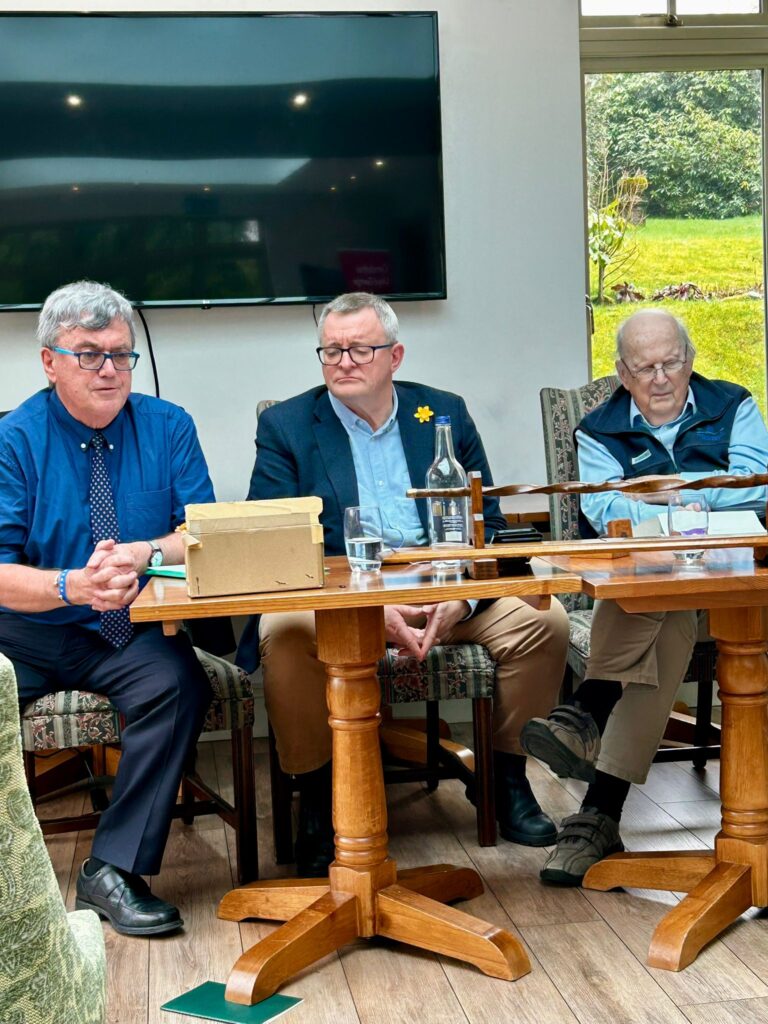
Charles began speaking about the research for his PhD thesis on Catalonia, which he began during the 1997 Scottish and Welsh Devolution Referendums. Around the time of the referendums, Catalonia was held up as a standard bearer of devolved government and a model that Wales should aspire to.
In summarising his PhD research, he developed a two-axis attitude scale:
Nationalist ↔ Supranationalist
Centralist ↔ Devolutionist
Charles noted that “People who are open-minded and support devolution are also like to support membership of the EU.”
As part of his research, he found that business leaders were moderately pro-EU and moderately pro-devolution. Whilst political leaders were strongly pro-devolution and somewhat more pro-EU.
Yet, he goes on to show that Wales was an anomaly in that it was pro-devolution but voted to leave the EU in 2016. Suggested factors for this anomaly included:
- Democratic exhaustion.
- Misinformation.
- Weak campaign by the Remain camp and, in particular, the Labour Party.
- Long-term media hostility.
- Latent xenophobia.
Charles suggested that these factors have not been subjected to proper academic research. Moving on to the Wales for Europe manifesto, Smith argues that the next Senedd should encourage closer collaboration with the EU.
One of the more interesting aspects of the manifesto is the suggestion of a Welsh Cabinet Member for International Affairs. This would not be a foreign secretary, as that is a reserved power, but it would be used to strengthen Welsh relations with the EU.
Baroness Joan Walmsley spoke next and described waking up to the news of the results of the Brexit referendum as “…the worst morning of my life.” She is hopeful of Labour moving closer to the EU, citing the positive step of the UK returning to the Horizon plan.
Lord Martin Thomas spoke about the failure of the Windsor Framework and that the answer was for the UK to rejoin the EU, especially in light of the danger presented by the current US administration.
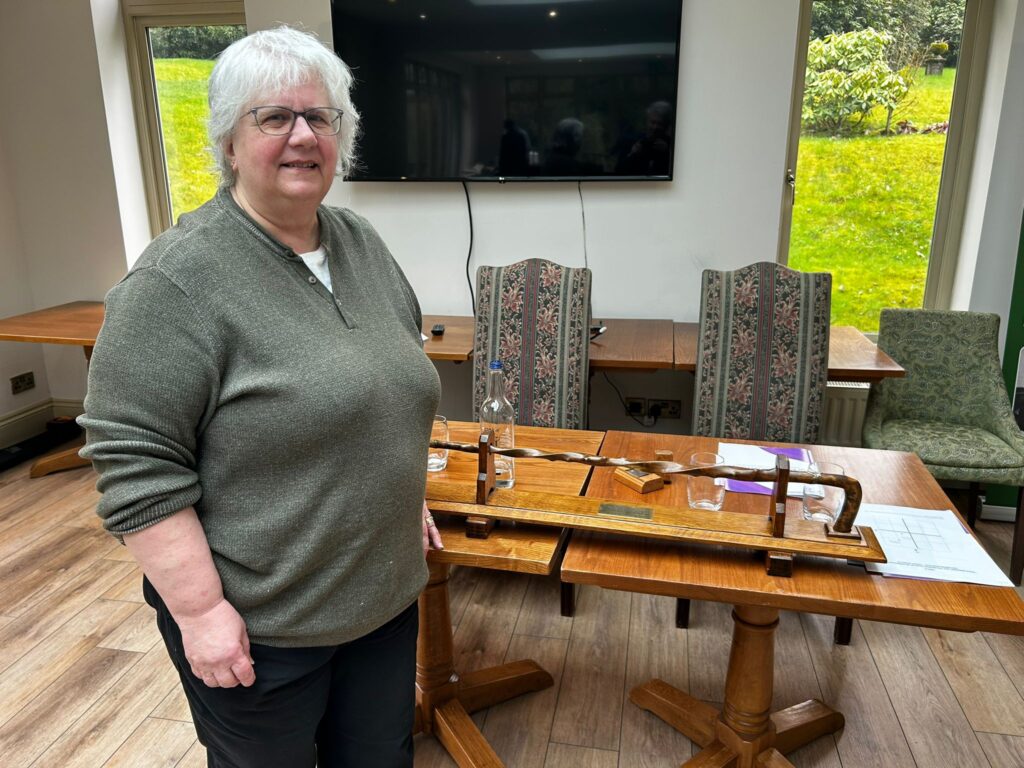
For the third session of the day, we were joined by Norena Shopland, who gave a very interesting talk on Gwenllian Morgan, the first female mayor in Wales.
Gwenllian Morgan came from a middle-to-upper-middle-class Welsh family and was raised by her wealthy aunt, who instilled in her the belief that “…your entire being in the world is to do good for others.“
This remarkable woman was deeply knowledgeable about political organising, canvassing and strategy. She was one of the leading proponents of temperance in South Wales and worked closely with leaders of the global temperance movement.
She opposed militant suffragettes on the grounds that women should work their “…way up through local politics” to prove their capability.
As this research is still ongoing, I won’t go into too much more of the presentation other than to say that Gwenllian Morgan should be remembered, and her legacy in Wales and on Welsh politics is coming to light. There is a sculpture of her in Brecon’s courtroom.
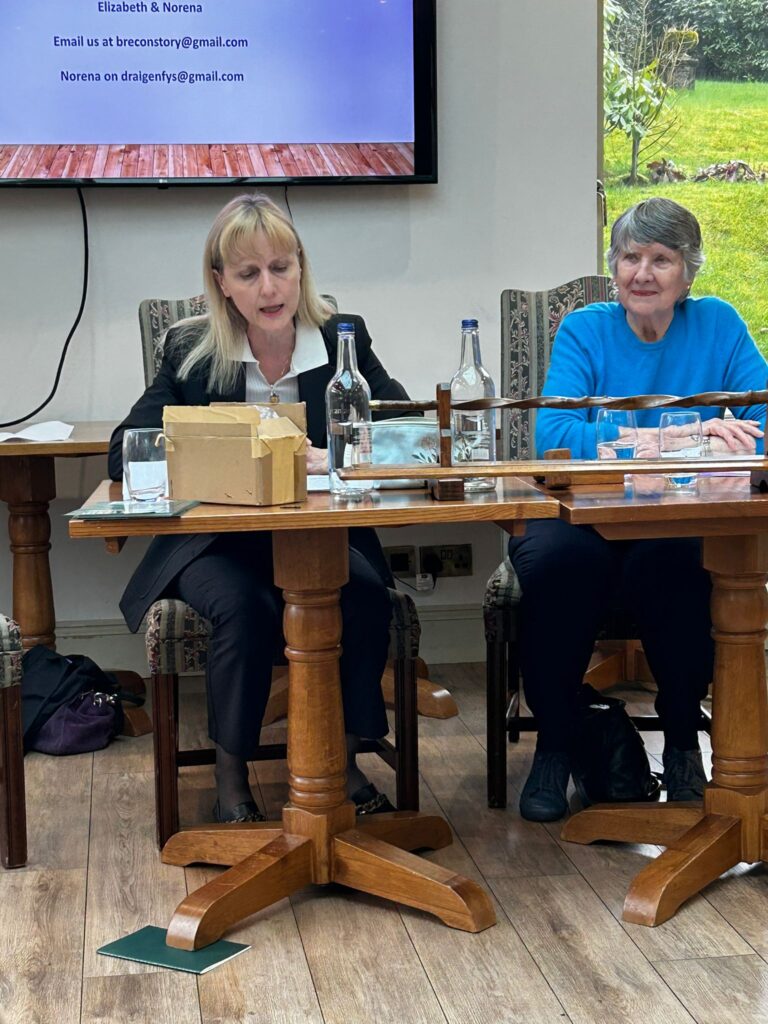
Next up, we were given an insight into the current state of French politics by Professor Elizabeth Gibson-Morgan from the University of Poitiers and a Vice President of the Lloyd George Society.
Elizabeth’s talk began with a quick history lesson on why the current Fifth Republic replaced the chaotic Fourth Republic in 1958. Between 1944 and 1958, there were no fewer than 26 governments. The Fifth Republic created a strong presidency and, for decades, produced what some scholars called a “happy Republic.“
However, the lecture showed that this stability has now eroded and France is facing political fragmentation, rising populism and declining trust in its political institutions.
As always, Elizabeth provided an insightful foray into European politics. She concluded the talk by stating that “The Constitution has proved amazingly resilient and adaptable throughout the years.” Reform is needed, especially electoral reform, but a full constitutional overhaul is unlikely.
Elizabeth did give the room hope when she said that she believes France would “more than welcome” the UK back into the EU family.
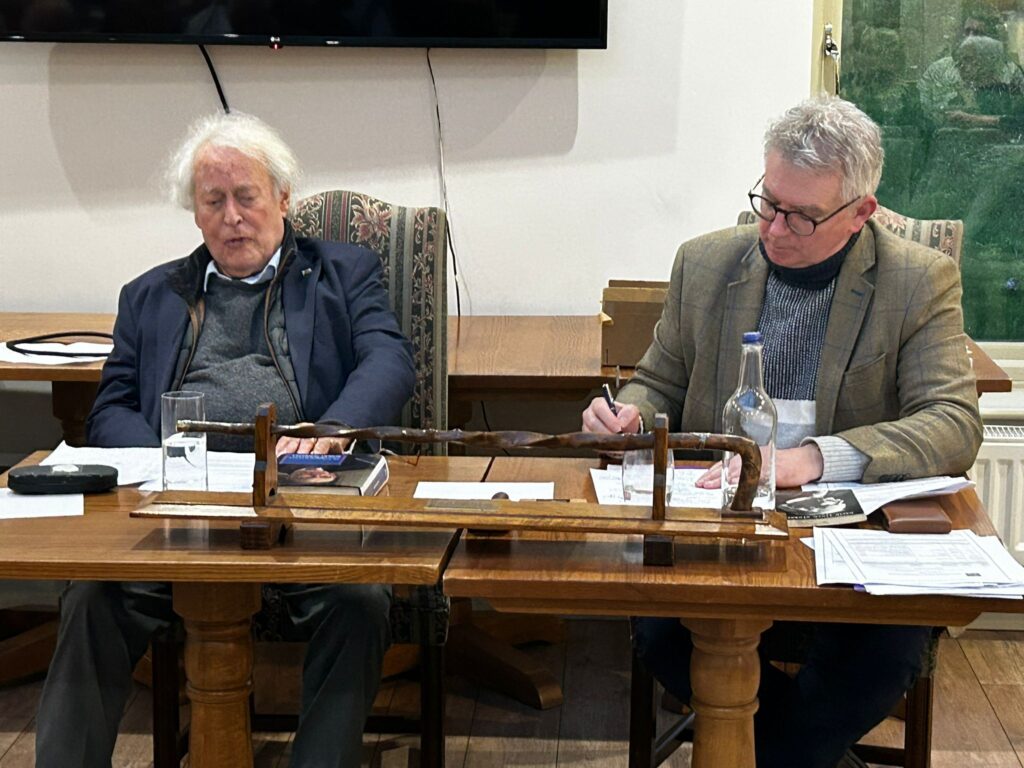
The last session on Saturday was the Lord Morgan Lecture, which the man himself fittingly gave. The lecture title was Lloyd George Closing Chapters: Lloyd George’s role in politics after 1922.
This was Lord Kenneth O. Morgan’s fifteenth lecture to the Society, and he reflected on his long engagement and fascination with Lloyd George.
On Lloyd George’s influence on politics after 1922, Kenneth noted that he was admired internationally, especially in the United States. He remarked on the dramatic shift in Lloyd George’s economic thinking during the late 1920s and his relationship with Keynes.
He also points to some missteps and controversies during the 1930s. These included his visit with Hitler in 1936 and unwisely involving himself in the abdication crisis.
Interestingly, Kenneth also discusses the little-known episode in which Lloyd George was apparently offered the post of British Ambassador to the United States. It is unclear why he turned it down, but Kenneth believes he may have felt it “wasn’t his war.“
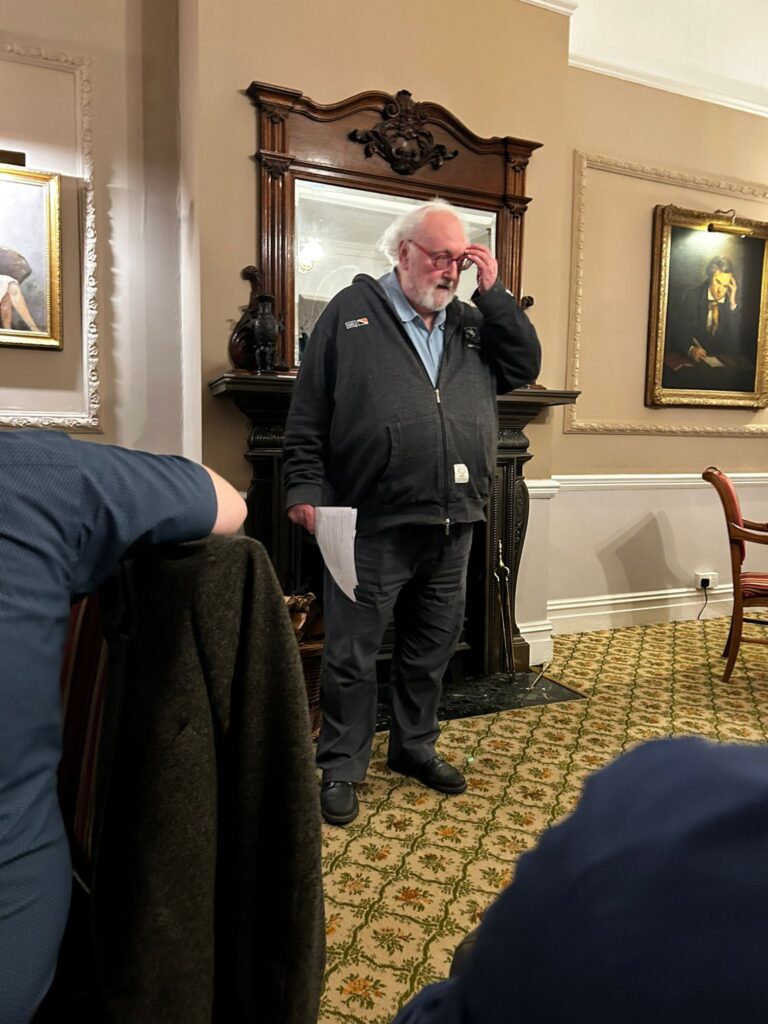
For the after-dinner speaker (did I mention how good the food was?), we were treated to a speech from Martin Shipton, author and Wales Journalist of the Year 2024.
Before attending the Lloyd George Society Weekend, Martin had perhaps the most eventful and scary week of any of our speakers. So, it was good to see him in fine form, despite the police messing up his notes.
Martin has been working on a book about Labour’s century-long dominance in Wales. Judging by the small snippet that he shared with us, the book will be a deep dive into how Labour has maintained power through centralisation, nepotism, patronage and alleged corruption. The book will be finished after the Senedd elections and promises to be an eye-opener.
Sunday
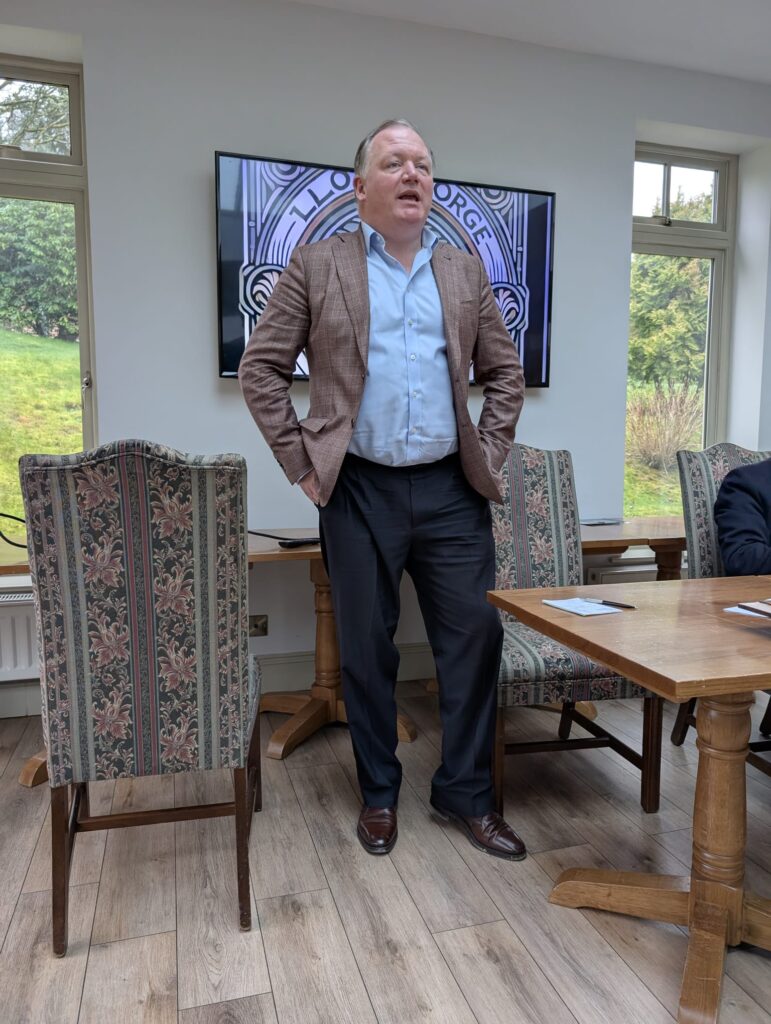
Damian Collins, the former Conservative MP, opened the Sunday sessions talking about his latest book, Rivals in the Storm: How Lloyd George Seized Power, Won the War and Lost His Government. Just as an exclaimer, I have reviewed this book for an upcoming issue of the Journal of Liberal History.
Damian noted that the impetus for writing this book came from working on his previous book on Philip Sassoon, Lloyd George’s friend and Parliamentary Private Secretary.
As this talk was about Damian’s book, I won’t go into too much detail other than to highlight that he argues Lloyd George invented the modern office of Prime Minister, transformed wartime governance and remains a figure that each generation must reinterpret. It’s a book of political intrigue, and Damian brought this all out in his talk.
I would urge you to read Damian’s book. I was very impressed by how he wove everything together in a thoroughly enjoyable way. I couldn’t put it down. It’s a book that we shouldn’t need after all these years, but it turns out we did need it.
Damian – apologies for almost polishing off your bottle of wine.
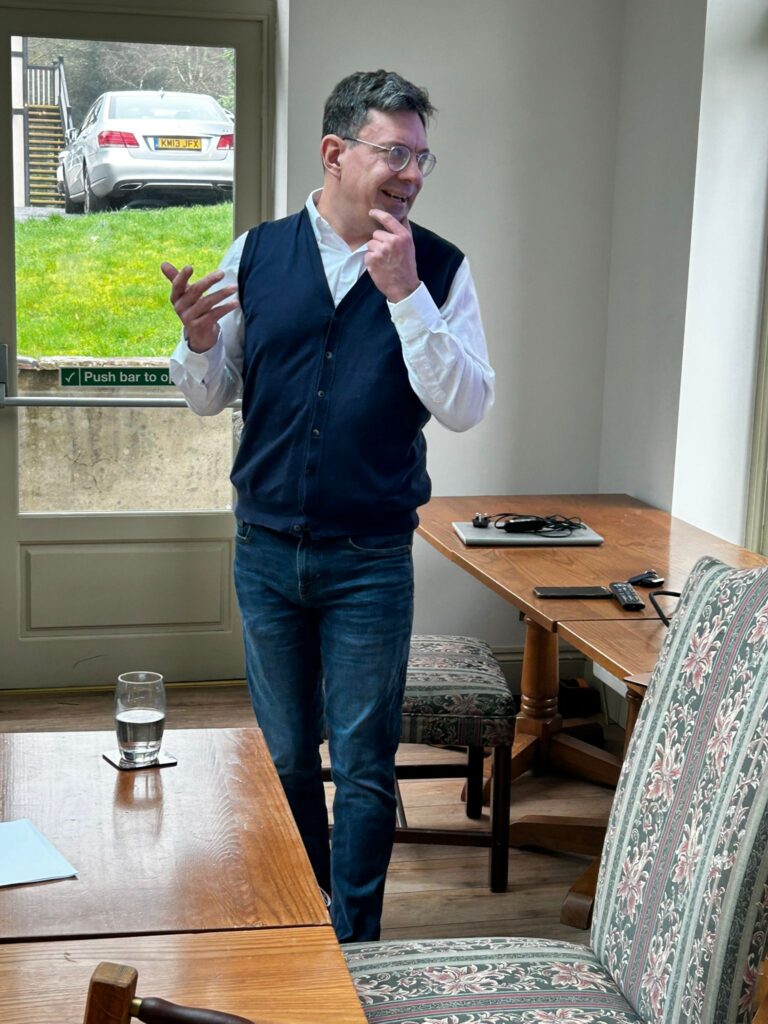
The penultimate talk of the weekend brought us bang up to date. Dr Jonathan Kirkup from Cardiff University’s talk was titled The Senedd Election – What could occur?
Jonathan guided us through a deep dive into the coming election. He points out that the polling indicates that Labour’s hegemony in Wales will end in May, with Plaid Cymru and Reform being the main beneficiaries. His analysis shows that there has been a shift in voter identity, with an increase in those describing themselves as Welsh only and a decrease in British identification.
He concludes that, other than the likelihood of who will take the main positions, the outcome has been impossible to predict due to the new voting system and the number of undecided and non-voters.
For us political geeks, of which, dear reader, you are one, this talk was exciting and terrifying at the same time. Jonathan is a regular fixture at our Weekend, and he always provides us with big questions to mull over.
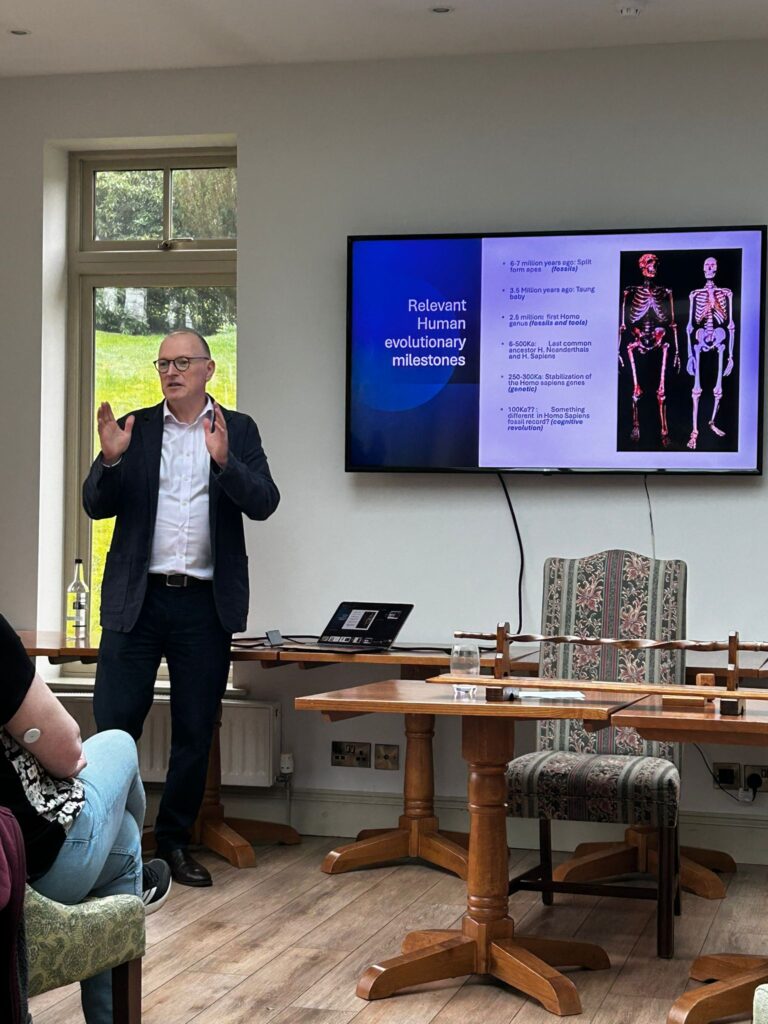
Speaking of big questions, our final speaker of the Weekend asked us the biggest question of all – What makes us us? Sorry, that was too simplistic, and the title of the talk was ‘The Intertwining of biological and cultural evolution in humans. An ongoing story. The speaker was Chris Gorman, a consultant eye surgeon from Cardiff.
The talk was based on Chris’s theory that while all animals have mental models of the world, humans are distinguished by their ability to constantly evolve these models through both individual and collective cultural learning.
As Chris is at the start of this journey, it would be unfair of me to give too much away. Although I have to say I was fascinated from the start, and I do not doubt that this is because Chris was able to explain his new scientific theory in an easy-to-grasp way. He didn’t dumb it down, and it was totally accessible. If you get a chance to listen to this man, I urge you to do so. When he decides to put this theory on paper, I’ll be the first in the queue for a copy of the book.
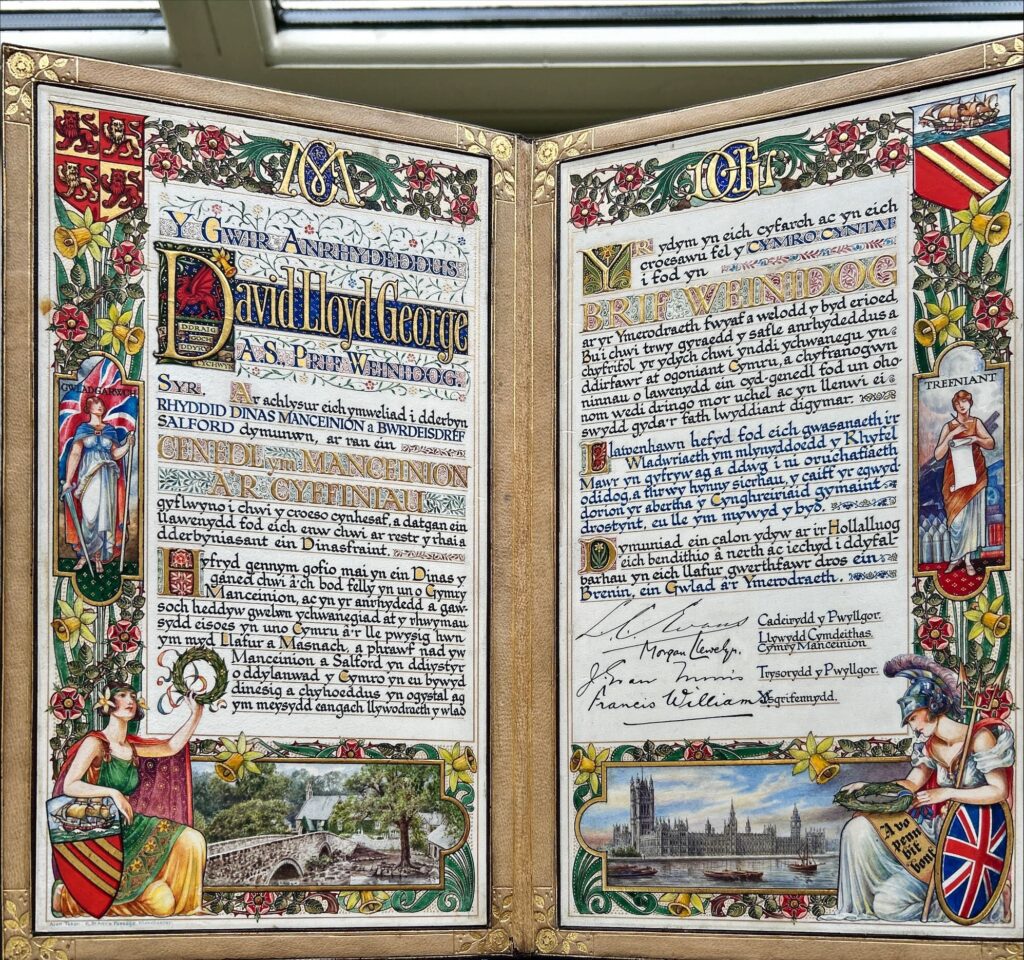
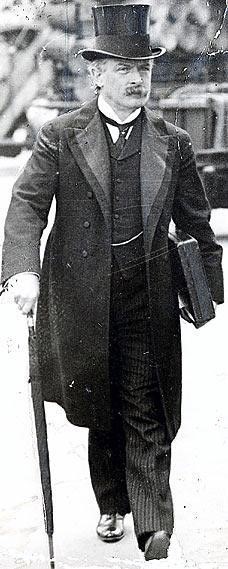
The Lloyd George Society has always been an enjoyable weekend, but I feel the new venue has lifted it to an all-new level. The experience was further elevated by the presence of the Welsh Political Archive, displaying several pieces of its vast collection of Lloyd George artefacts. To actually see items that were held, signed by or used by Lloyd George brought us closer to the man.
Photos of the weekend, including the accommodation, speakers and food, can be found here. I must also thank those who chaired the various talks: Lord Thomas, Cllr Bill Powell, Professor Russell Deacon, Baroness Joan Walmsley, David Phillips and Richard R. O’Brien.
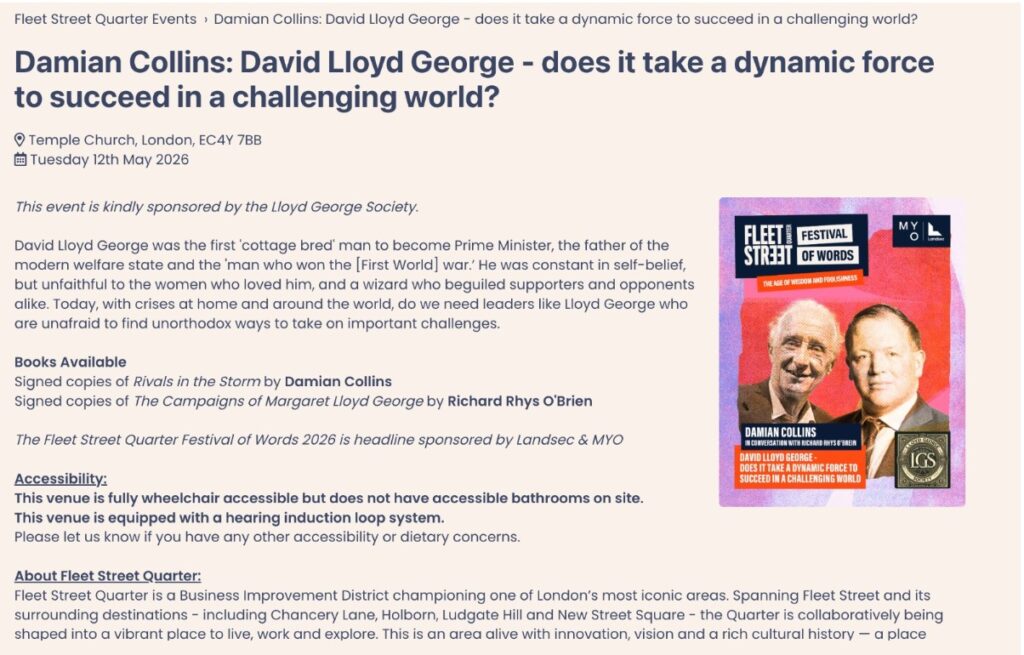
Catch Damian Collins and Richard Rhys O’Brien in conversation at the Fleet Street Festival of Words, London, on May 12th. This is an event sponsored by the Lloyd George Society; details are here, and tickets can be purchased here.
4 thoughts on “Lloyd George Society Weekend 2026 – A Meeting Report”
Thanks Deanna, I had forgotten about that and I have added it now. 🙂
Thank you Nicholas for this resume, and thanks to everyone for the very hospitable reception given to my little talk. The venue was exactly as Nick describes, idyllic and impressive. This was my second visit to Llangammarch Wells, the first time I was 10 years old and passed through the station with my family on a steam train from Swansea Victoria Station on the LNWR line to Shrewsbury, on our way to visit my Granny in Wolverhampton. I might have mentioned this at the conference, if I did I apologise for repeating it. I had another anecdote in mind which I did not use and might have been a bit more interesting for attendees as it’s linked to Lloyd George! I’ll save it for, hopefully, another occasion. Best wishes
Thank you Charles, it was great to have you there. 👍
Leave a Reply
Please add that an extra bonus was that those attending could take advantage of some of the spa facilities – the swimming pool, steam room, sauna and jacuzzi. Having stayed an extra day, I had a wonderful and relaxing end to the weekend, my physical as well as mental faculties given a boost!