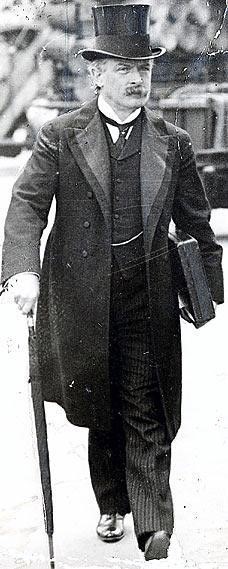
‘Over me beat the invisible wings’ – Ireland, Churchill and Lloyd George
The author, Charles Stephenson, has kindly agreed that we can publish a recent article that he has written.
Although far from conventionally religious, Churchill had long considered himself under the protection of Providence. He was certainly physically fearless and sought to put himself ‘in harm’s way’, as the phrase has it. Whilst campaigning in northern India in 1897 he had written to his mother, telling her: “Bullets . . . are not worth considering. Besides I am so conceited I do not believe the Gods would create so potent a being as myself for so prosaic an ending.” Indeed, his subsequent book on the Malakand campaign contained the immortal phrase: “Nothing in life is so exhilarating as to be shot at without result.”
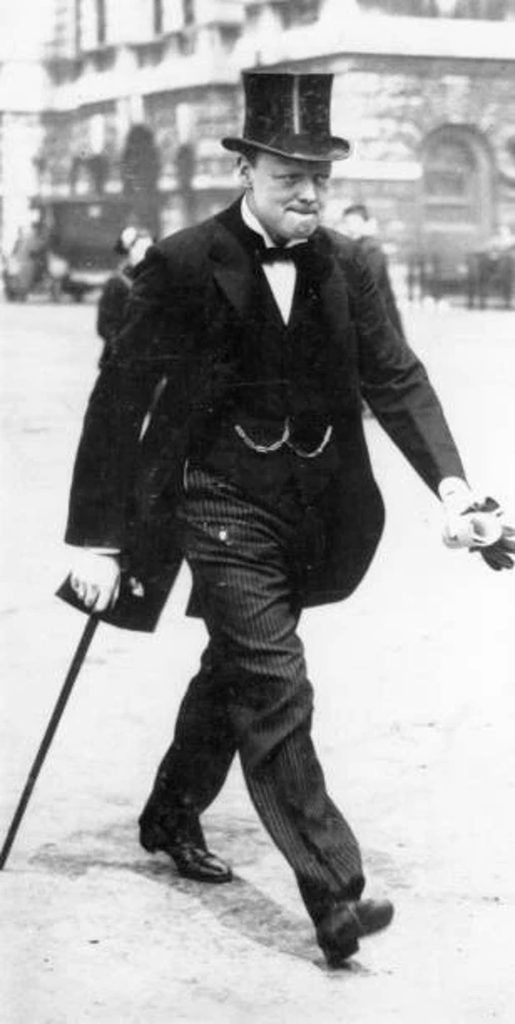
The ‘Gods’ also appeared to smile upon him in the political sense, though they most certainly worked in mysterious and convoluted ways. Following his ejection from the Admiralty in 1915, thanks mainly to the ongoing imbroglio around the Dardanelles, they seemed to have deserted him. His career seemed over. Yet a series of events, only discernibly related in retrospect, were to turn things around and materially assist him to embark on a second, high-level, political career.
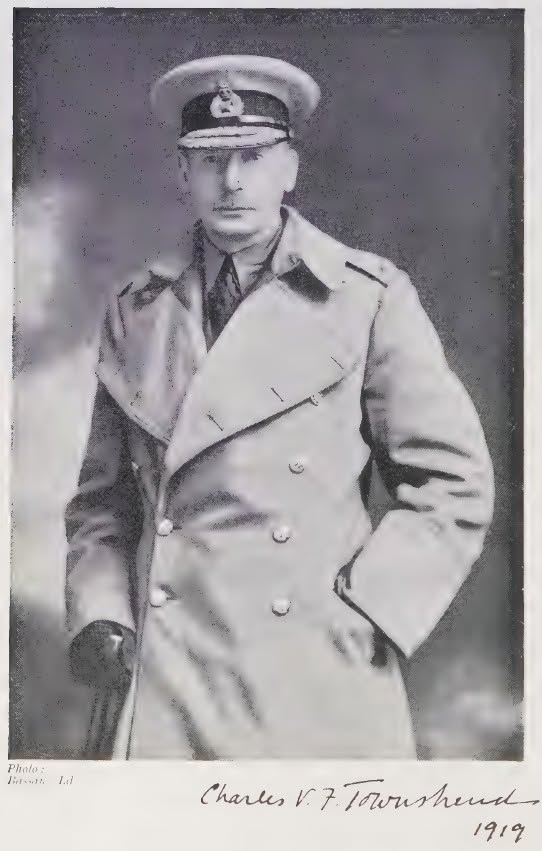
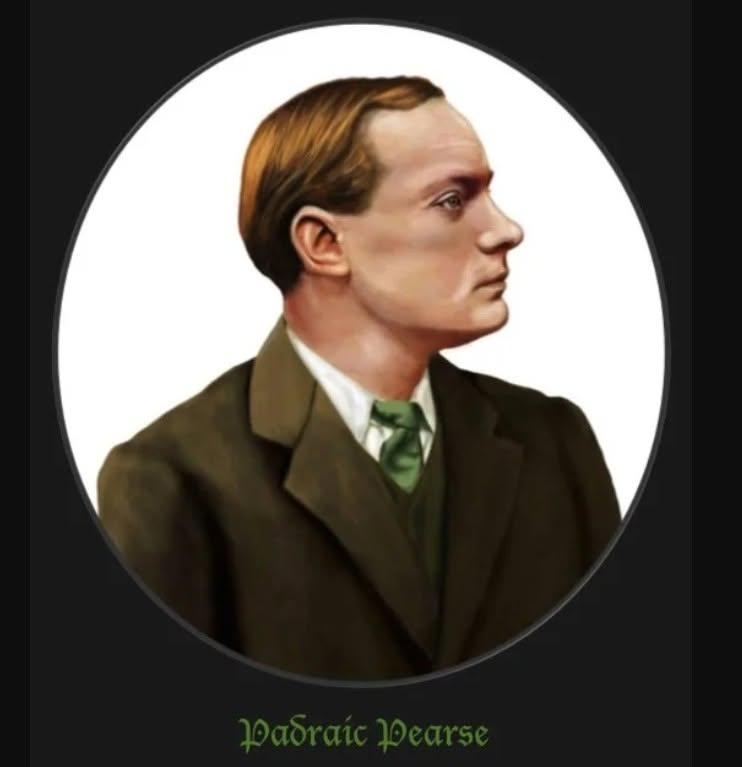
A convenient starting point for this process may be found on 29 April 1916. For the British Empire this was a day of twin capitulations at locations several thousand miles apart. One was a victory. The other decidedly not. Though Churchill had no direct involvement in either, they — or rather the consequences arising — were to greatly impact his political life. The two men who surrendered, along with their commands, were ‘President’ Padraig Pearse in Dublin and Major-General Sir Charles Townshend at Kut, Mesopotamia.
Taking the latter first: Asquith had told the House of Commons in early November 1915 of “a highly successful campaign, which has not, I think, attracted the attention it deserves — namely, the proceedings of our troops in Mesopotamia.” He then added: “I do not think that in the whole course of the War there has been a series of operations more carefully contrived, more brilliantly conducted, and with a better prospect of final success.” However, and rather unfortunately, as P. G. Wodehouse was later to quip: “Unseen, in the background, Fate was quietly slipping the lead into the boxing-glove.” Indeed so, and the punch was not long coming. The British forces were driven back to Kut al Amara on the Tigris and endured a 147-day siege before their commander, the unfortunate Townshend, was forced to surrender. Approximately 13,000 British and Indian soldiers were taken prisoner.
The political fallout at what many interpreted as yet another example of “bungling in high places” was immense. The Government was pressed to publish documentation relating to the affair. “Public curiosity,” it was argued, demanded full disclosure. The pressure to do so became relentless. The Gallipoli peninsula had been evacuated in January and the combined impact of these two defeats — both against the supposed “sick man of Europe” — forced the government to answer its critics.
This was undertaken reluctantly, and there were in truth formidable obstacles to carrying out such inquiries in wartime. Nevertheless, Asquith was eventually compelled to concede: there would be official enquiries into the campaigns at both the Dardanelles/Gallipoli and in Mesopotamia. The Dardanelles were famously Churchill’s ‘albatross.’ As he put it:
“Whenever I open my mouth in Parliament . . . someone shouts out that I am the man who let us in for the Dardanelles mistake, and the papers are perpetually repeating it. My usefulness in Parliament is entirely ruined until my responsibility is cleared on the subject.”
Clearing his ‘responsibility’ had appeared impossible. But now there would be an official forum in which he could state his case and, as he saw it, prove his innocence. Here then, thanks to events in far-away Mesopotamia, emerged one strand of a political way back.
A second strand evolved from Padraig Pearse’s surrender, which followed six days of fighting in Dublin after the Easter Rising of 24 April 1916. That day, Easter Monday, saw contingents of the Irish Republican Brotherhood, the Irish Volunteers, and the Irish Citizen Army occupy strategic locations in Dublin and declare an Irish Republic with Pearse as provisional President. The Rising, though it caught the British political and military leadership in Ireland with its trousers firmly at ankle level, was swiftly suppressed. There followed a week of urban warfare as the British forces surrounded the occupied areas and encircled the insurgents. The Rising failed to spark any wider, nationwide uprising and so, being outgunned, outnumbered, and “in order to prevent the further slaughter of Dublin citizens,” Pearse ordered his force to surrender at 3.45 pm on 29 April 1916.
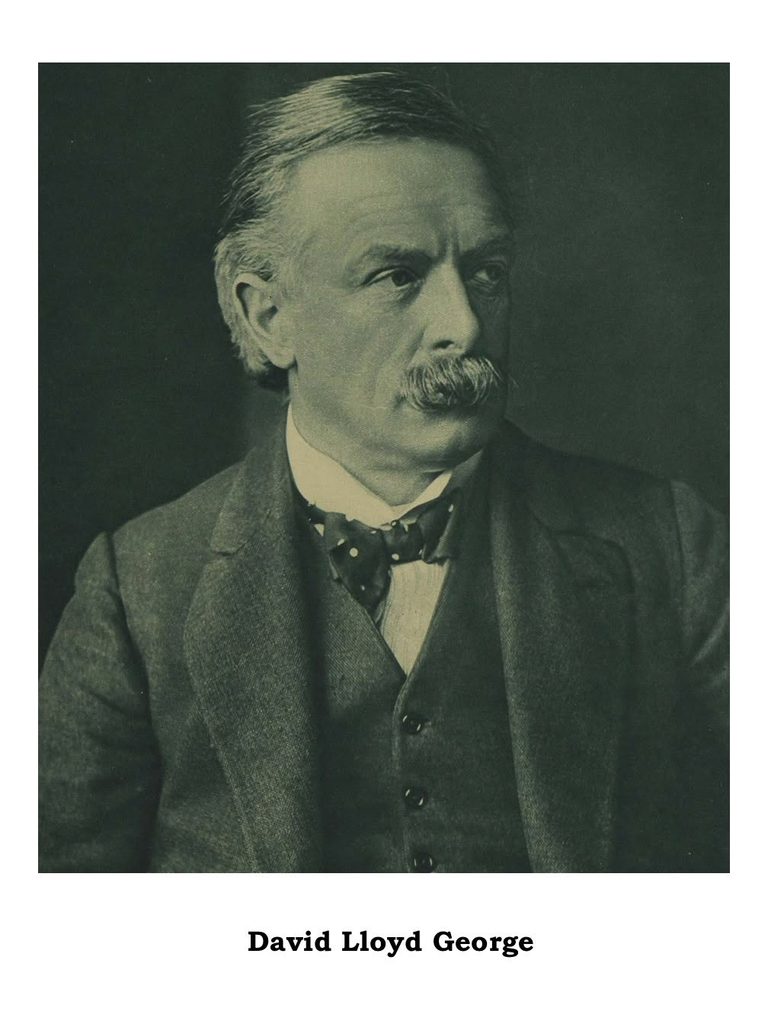
The aftermath of the Easter Rising saw Asquith deliver a plea to his Minister of Munitions, David Lloyd George, on 22 May: “I hope you may see your way to take up Ireland; at any rate for a short time. It is a unique opportunity and there is no one else who could do so much to bring about a permanent solution.” Thus, as Lloyd George informed his brother, “The PM and Bonar [Law] want me to take Ireland with full powers to effect settlement. Rather interesting that when there is a special difficulty they always think of me!” As fate determined it, he had good reason to be thankful that they did, for, as he was to explain, Asquith “saved my life!”
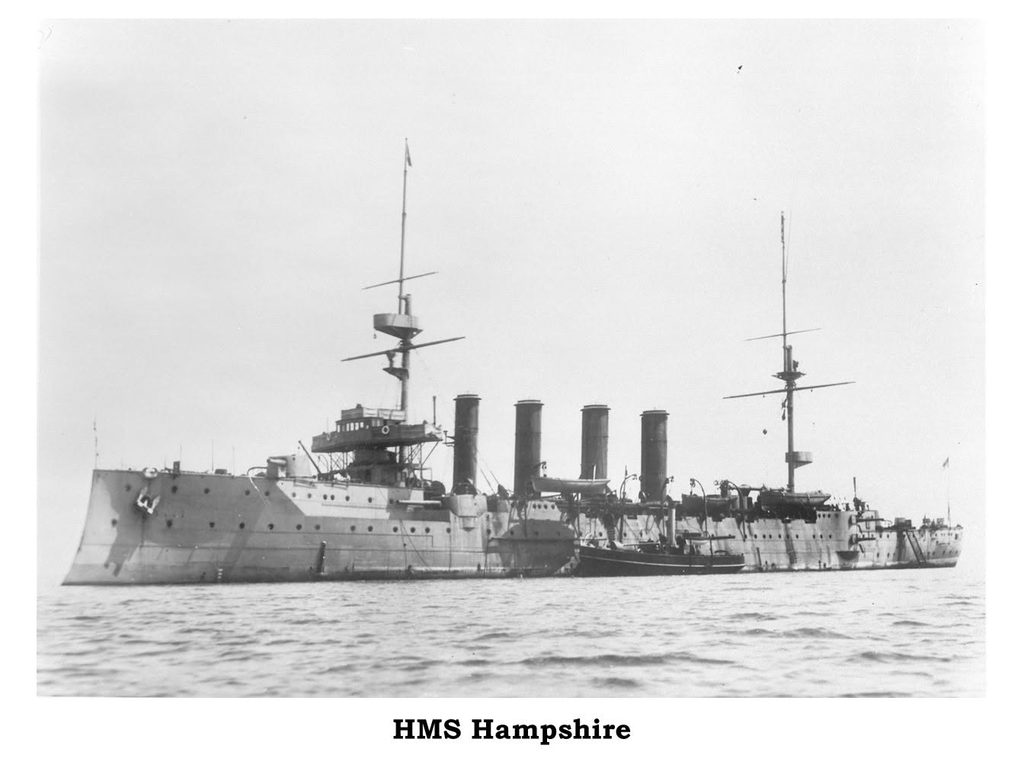
How? One might ask. The answer is that it had been intended that Lloyd George would go with Lord Kitchener to Russia in order to “see in what way the Ministry of Munitions could best help” to remedy Russia’s shortages. Had he done so, then he would have been aboard the armoured cruiser Hampshire, which on 5 June 1916 struck a recently-laid mine off the Orkney Islands. The weather was foul, and she went down in twenty minutes, taking 749 men with her. Only twelve survived. Neither Kitchener nor any of his entourage were among them.
Lloyd George was one of the relatively few senior politicians of the day who retained a degree of faith in Churchill. He had told his friend Lord Riddell he thought that, despite his travails, “Winston may retrieve his position.” Indeed, Lloyd George was probably the only man — and certainly the only senior politician — who both believed it and, after he became Prime Minister in December 1916, could make it happen.
That was for the future. First Churchill had to detach his ‘albatross’ and so, for five months from July to November 1916, he worked on preparing his case for the Dardanelles Commission. He assembled documents, rehearsed arguments, and drafted increasingly elaborate narratives — several hundred handwritten pages in all.
The Commission itself, announced on 18 July 1916 under the Special Commissions (Dardanelles and Mesopotamia) Act, was to be chaired by the Earl of Cromer, a former Consul-General of Egypt. Cromer’s selection represented a further stroke of good fortune for Churchill; both Asquith and Bonar Law had originally wanted Lord Milner, a former Governor of the Transvaal and Orange River colonies, to take the post. It would have been a controversial appointment; Milner had been publicly scathing about the Dardanelles operation whilst it was still ongoing. Further, he had nurtured a grudge against Churchill since the ‘Milner Censure Debate’ of 21 March 1906. Perhaps fortunately for Churchill then, Milner declined despite some pressure from Bonar Law.
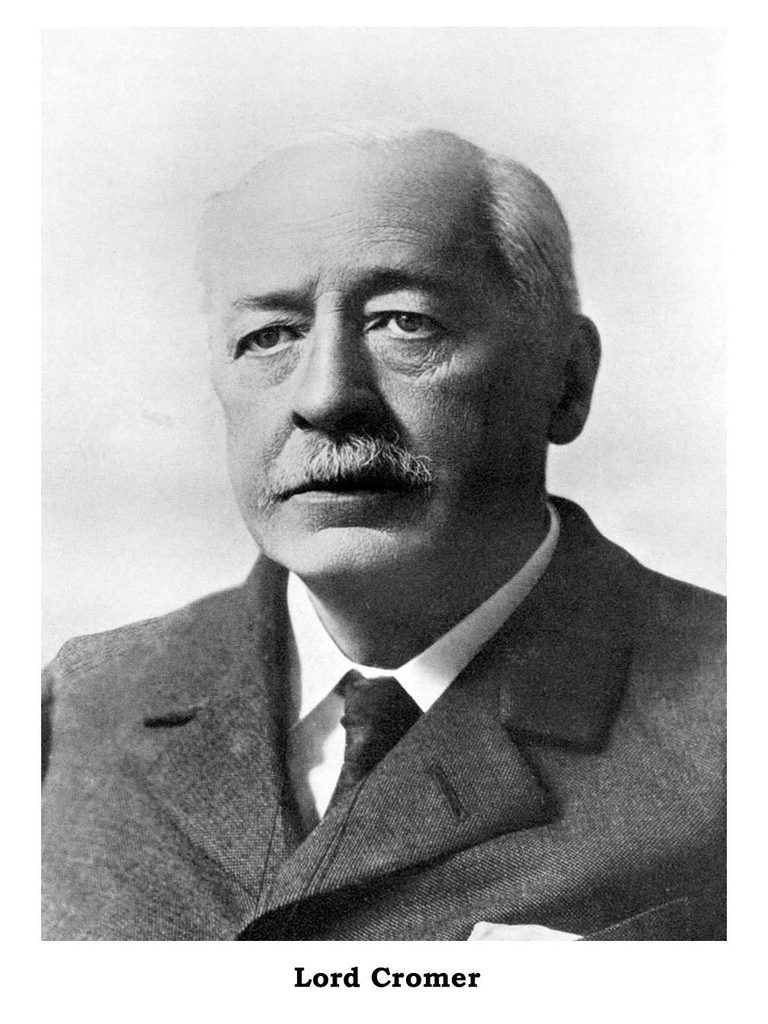
Under Cromer were two former dominion Prime Ministers — Andrew Fisher of Australia and Sir Thomas Mackenzie of New Zealand — alongside four serving MPs: Sir Frederick Cawley, Liberal MP for Prestwich; Stephen Gwynn, Irish Parliamentary Party MP for Galway Borough; James Clyde, Liberal Unionist (Conservative) MP for Edinburgh West; and Walter Roch, Liberal MP for Pembrokeshire. Two senior military figures completed the panel: Admiral of the Fleet Sir William May and Field Marshal Lord Nicholson.
The Commission first sat on 23 August 1916 to take evidence from General Sir Charles Monro (the later target of the famous Churchillian verbal dart: ‘an officer of swift decision. He came, he saw, he capitulated.’) who was “about to proceed to India”. It then adjourned for 27 days in order to enable Maurice Hankey, Secretary to the War Cabinet, to “prepare a summary of the proceedings of the [War] Council in so far as they dealt with the Dardanelles expedition”. Hankey then became the second witness, acting “in effect, as defending Counsel for the government”, and giving his evidence over two days on 19 and 27 September. Between the earlier date and 4 December, the Commission held twenty sittings examining a total of 31 witnesses. Apart from Hankey, there were only three who were before the Commission for more than one day apart from Churchill.
The format was far from being to Churchill’s liking. He had written to Cromer on 12 August, requesting permission to be present throughout the inquiry, to bring his own witnesses, and to conduct his case himself. The Commissioners’ reply was blunt: they sat in secret, and no one was admitted. He was, however, to be afforded a concession granted to no other witness: the right to recall and cross-examine those who had already given evidence.
He did so on both 24 and 25 October, calling Sir Graham Greene, Secretary to the Admiralty, and Vice Admiral Oliver, Chief of the Admiralty War Staff, back and cross-examining them himself. This was in addition to questioning Captain Reginald Hall, the Director of Naval Intelligence. There can be no doubt that Churchill was afforded every opportunity and facility to present his side of the story. He thought so too, writing on 27 October that: ‘I am slowly triumphing in this Dardanelles Commission, and bit by bit am carrying the whole case. I am really hopeful that they will free me from the burden which cripples my action.’
Lord Northcliffe – who used the Daily Mail ‘as his personal voice to the masses of Britain’ – was anxious that the burden should not be lifted. His most popular newspaper denounced the “megalomaniac politician” who had “sacrificed thousands of lives to no purpose.” Churchill wrote to Cromer protesting about the article in question, which, he argued, “shows very clearly the kind of attack to which I am exposed and from which I have every right to defend myself before the Commission.”
Cromer, who had been very unwell for some time, signed the first part of the Dardanelles Commission report on 29 January 1917 and rather promptly passed away. The interim ‘First Report’, which dealt with evidence submitted up to and including 4 December 1916, dealt with the period of ‘Origin and Inception’ of the Dardanelles expedition — 4 August 1914 to 23 March 1915. It was published on 8 March 1917.
Despite Churchill expressing disappointment at the contents, it is difficult to argue that he had not come well out of it. It was, as he phrased it, “mottled” in the sense that there was criticism of him and his role, but any notion of his sole responsibility was demolished. Some of the comments on Churchill were masterpieces of understatement. For example, the Commission noted that Churchill “probably assigned to himself a more unobtrusive part than that which he actually played.” There was also some plain speaking:
“The views entertained by Mr Churchill at the time as to the prospects of success of a purely naval operation were, as we shall presently show, somewhat more optimistic than was warranted by the opinion of the experts. Under these circumstances, Lord Kitchener grasped, perhaps rather too eagerly, at the proposal to act through the agency of the Fleet alone, though he recognised the objections to any such undertaking, but it cannot with justice or accuracy be said that the responsibility for proposing the adoption of this course rested with him. It rested rather on the First Lord.”
The report acknowledged however that the “opinion of the experts” was not necessarily known at the time. With respect to Fisher, it had this to say:
“Lord Fisher did, indeed, state in the course of his evidence that he ‘was dead against the naval operation alone because he knew it would be a failure.’ He also said, ‘I must reiterate that as a purely naval operation I think it was doomed to failure.’ But he did not at the time record any such strongly adverse opinions as these, neither does he appear to have impressed others with the strength of his objections.”
Though he wasn’t the only one to do so, Asquith confirmed this. Upon being asked whether Lord Fisher had ever given him to understand that from the first he considered the Dardanelles expedition was “doomed to failure,” he replied: “No, he never said that to me. He would always have preferred a conjoint military and naval operation, but he never said it was doomed to failure; and I do not think he thought it was.”
The Commission commented on this aspect of the decision-making progress:
“It is impossible to read all the evidence, or to study the voluminous papers which have been submitted to us, without being struck with the atmosphere of vagueness and want of precision which seems to have characterised the proceedings of the War Council.”
Having identified a problem they went on to outline certain effects that this had in practice:
“We have not the least doubt that, in speaking at the Council, Mr Churchill thought that he was correctly representing the collective views of the Admiralty experts. But, without in any way wishing to impugn his good faith, it seems clear that he was carried away by his sanguine temperament and his firm belief in the success of the undertaking which he advocated. Although none of his expert advisors absolutely expressed dissent, all the evidence laid before us leads to the conclusion that Mr Churchill had obtained their support to a less extent than he himself imagined.”
This was quite clearly a criticism of Churchill, but the faults identified certainly did not lie with him alone. They were exacerbated by the way the War Council conducted its business. The Commission found that “the other members of the Council, and more especially the Chairman, should have encouraged the experts present to give their opinion, and, indeed, should have insisted upon their doing so.” The lack of any effort by the War Council in general, and the Prime Minister in particular, to question and probe the issue featured in the Report’s conclusions:
“Mr Churchill appears to have advocated the attack by ships alone . . . on a certain amount of half-hearted and hesitating expert opinion, which favoured a tentative or progressive scheme . . . there does not appear to have been direct support or direct opposition from the responsible naval and military advisers . . . as to the practicability of carrying on the operation as approved by the War Council.”
Again though, far more serious disapproval was directed at Asquith and other members of the War Council generally. It was noted that there had been no meeting of the Council over the period when “important land operations” were in progress, and that these should have been considered beforehand:
“In our opinion the Prime Minister ought to have summoned a meeting of the War Council for that purpose, and if not summoned, the other Members of the War Council should have pressed for such a meeting. We think this was a serious omission.”
Kitchener came under mild criticism: “We are of opinion that Lord Kitchener did not sufficiently avail himself of the services of his General Staff, with the result that more work was undertaken by him than was possible for one man to do, and confusion and want of efficiency resulted.” On the other hand, Fisher received direct censure: “We are unable to concur in the view set forth by Lord Fisher that it was his duty, if he differed from the Chief of his Department, to maintain silence at the Council or resign. We think that the adoption of any such principle generally would impair the efficiency of the public service.”
Two members of the Commission wrote dissenting opinions, and Roch declined to sign the report at all and wrote a lengthy ‘Memorandum’ containing “The conclusions which I have come to, and the review of the evidence which, I think, justifies these conclusions”. This was highly critical of the War Council in general and Churchill in particular.
Lord Riddell (the owner of The News of the World) had discussed the Report with Lloyd George prior to its publication. He had opined that “Winston does not come out white or black, he comes out grey.” The question now was whether it would, as Churchill had hoped, free him from “the burden which cripples my action.” Perhaps unsurprisingly, Northcliffe’s Daily Mail thought not. Under the headline ‘A Damning Report’ it condemned what it called “the old gang” in vicious terms, but reserved special venom for Churchill:
“Asquith wobbled, Kitchener did not realise the facts and ignored his staff, Churchill misled everybody, Lord Fisher and other experts sat mum — weeks of muddle and delay. The report proves they threw away the lives of 40,000 men and brought on our arms the greatest disaster which those arms ever suffered, through their reckless folly, dereliction of duty, and negligence . . . Mr Churchill was guilty in the first degree. He misrepresented the experts and interfered in matters of which, as a layman, he knew nothing.”
The Times was more measured in its censure and, arguably, all the more devastating for it:
“Mr Churchill remains, as the public have rightly held, the prime mover in the Dardanelles adventure. He was at least consistent in his purpose when all the rest were vacillating. But it was the consistency of a dangerous enthusiast, who sought expert advice only where he could be sure of moulding it to his own opinion, and unconsciously deceived both himself and his colleagues about the real character of his technical support. All things considered, the nation may well be thankful that they were saved in the end, by the suppression of Mr Churchill, from a still more extensive disaster in the Straits.”
The Parliamentary Debate on the report took place on Tuesday, 20 March 1917 with, naturally enough, Churchill’s contribution the one most eagerly awaited. When he rose to speak, he welcomed publication because, as he argued, the Commission had “swept away directly, or by implication, many serious and reckless charges which have passed current broadcast throughout the land during the long months of the last two years.” He then moved onto a highly detailed defence of his involvement, the crux of his argument being that at no time had he overridden the advice of the senior officers at the Admiralty. On the contrary, he had sought and obtained their agreement.
He concluded with an extraordinarily powerful and truly Churchillian peroration, which was to form the basic template for his justification of the Dardanelles operations for the rest of his days. It dwelt on themes of lost opportunity caused by short-sightedness and obstructionism:
“The light of victory was shining clearly before us, and the path was clearly illuminated, yet we could not get the strength, the power, and the driving force to follow it . . . It will always be incredible to future ages that every man in this country did not rally to an enterprise which carried with it such immense possibilities, and which required such limited resources to carry it into effect . . . When this matter is passed in final review before the tribunal of history, I have no fear where the sympathies of those who come after us will lie. Your Commission may condemn the men who tried to force the Dardanelles, but your children will keep their condemnation for all who did not rally to their aid.”
This was stirring stuff, though if Churchill thought he had managed to quiet his critics then he was quickly disabused. The Dardanelles curse endured, and the shadow was long; he could not shake off the ‘albatross.’ Charles Bean, Australia’s Official War Correspondent, who had been at Gallipoli during the military operations, penned a much-quoted sentence on the matter: “So, through a Churchill’s excess of imagination, a layman’s ignorance of artillery, and the fatal power of a young enthusiasm to convince older and more cautious brains, the tragedy of Gallipoli was born.”
So, and no matter what the Dardanelles Commission might have said, Churchill’s culpability continued to be taken as a given by many. The Commission report did though provide some political ‘cover’ for Lloyd George, who recognised Churchill’s abilities and wanted him in his administration. He faced formidable difficulties. The Sunday Times, for instance, published an outraged editorial on 3 June 1917 which complained of the ‘powerful clique which has been working persistently to get Churchill back to office.’ It reckoned that success in this venture would:
“. . . constitute a grave danger to the Administration and the Empire as a whole [. . .] His public record has proved beyond all argument or doubt that he does not possess those qualities of balanced judgment and shrewd far-sightedness which are essential to the sound administrator [. . .] We say with all deliberation and with the utmost emphasis that nothing would tend more effectively to damn Mr. Lloyd George’s Government in the eyes of the whole country than the co-option of Mr Churchill.”
Lord Curzon, a War Cabinet member and Leader of the House of Lords, wrote to Bonar Law on 4 June protesting at the possibility: “As you know, some of us myself included only joined Lloyd George] on the distinct understanding that Winston Churchill was not to be a member of the Government.”
So it was that Lloyd George, though armoured with the conclusions of the Dardanelles Commission, effectively threw down a direct challenge to the Tory ranks when, on 17 July 1917 he appointed Churchill to the non-Cabinet post of Minister of Munitions. The reaction was predictable and, as Bonar Law’s biographer put it, “Tory indignation knew no bounds.” One of the most indignant being Bonar Law himself, who was furious when he learned that the Prime Minister had presented him with a fait accompli. Lloyd George, it is said, prudently avoided Bonar Law for the rest of that day. The Prime Minister certainly felt the tremors, writing that “the Tory antipathy to him [Churchill] was so great that for a short while the very existence of the Government was in jeopardy.”
The storm blew out. Lloyd George’s judgment was vindicated. Churchill proved a successful Minister of Munitions and retained Cabinet rank in the postwar government. His later career needs no summarising here.
Whether or not the workings of divine providence are discernible in the apparently unrelated events referred to is a matter largely beyond us mere mortals. Churchill himself declared that “It is not in our power to anticipate our destiny.” Nobody, for certain, could or would have anticipated his. Yet in what can only be described as the most dramatic and unpropitious of circumstances, and by his own account, in May 1940 he found himself and destiny walking in lockstep – “Over me beat the invisible wings”. But that, as the cliché has it, is another story; a history he would himself both make and write.
About the author
Charles Stephenson is an historian whose books encompass military, naval and political history. His latest book The Early Churchill – Fall and Rise 1915-1918 is available from Pen & Sword Books.