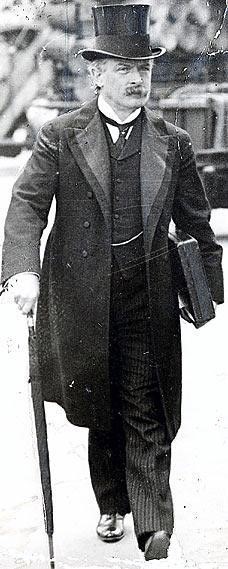
Interview with Paul Spackman, biographer of David Lloyd George
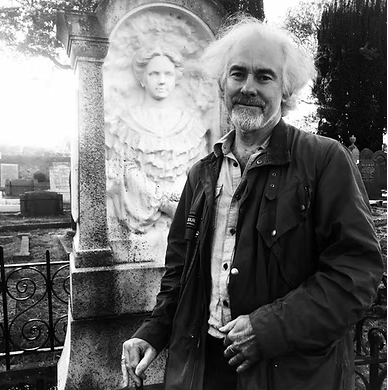
Paul Spackman, the author of a recently published biography of David Lloyd George, has kindly answered some questions about his book David Lloyd George – Welsh Radical, World Statesman.
Can you tell us a bit about yourself and how you came to be an author & biographer?
I have always been fascinated by History, the endless insights it gives into other lives and our own existence, and I studied History with Associated English at King Alfred’s College, now the University of Winchester. I felt drawn to make my own contributions to such studies, often approaching historical subjects through the lens of a particular individual, which helps to both focus and personalise them.
I had been taken to see ‘A Man For All Seasons’ (1966) as a six-year-old; it made a huge impression, especially living by the Thames not far from Hampton Court Palace: I duly did my undergraduate thesis on ‘The Early English Lives Of Sir Thomas More’. As I began work on my first book, ‘God’s Candidate’, between 1985-1990 I received much help from the then-Librarian of St Michael’s Abbey, Farnborough, Richard Hardy OSB, and from Leander Hogg OSB.
Between 1992-2001, I wrote articles and reviews for author George Bull’s ‘International Minds’, a quarterly journal of psychological insight into international affairs, a great training in authorship. George was personally most encouraging regarding my writing.
Your earlier book, God’s Candidate, focused on the life of John Paul I. Can you tell us a bit about that book?
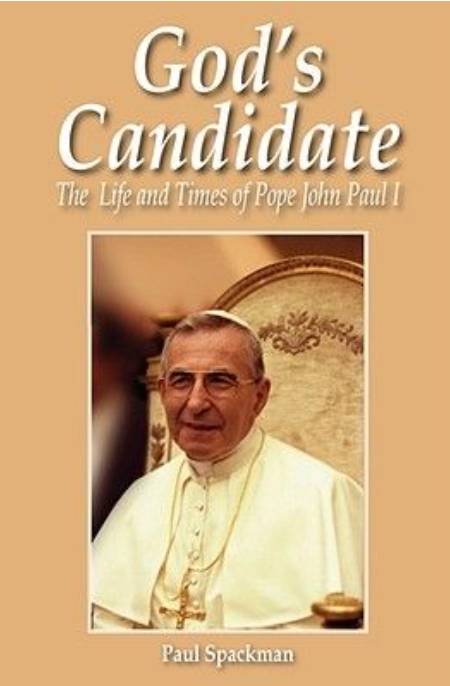
‘God’s Candidate’ (2008, Gracewing) was about Albino Luciani (1912-1978), who briefly reigned as Pope John Paul I in 1978. There was much hope generated around him as a humane reformer, but when he suddenly died, absurd conspiracy theories began to be spun around his death. I wanted to investigate the circumstances of this myself, but was soon drawn by his personality and ideals to write a full biography of his whole life, the first such treatment in English anywhere.
After publication, my interest in him continued, and this year a much enlarged version is being published in Italy, in Italian, as ‘Il Candidato di Dio’ by Edizioni Antiga. Following on from this, I am now working on ‘Italy: Continuity and Change, 1945-1995’, approaching the nation much as I would a biographical subject.
Your new book, David Lloyd George Welsh Radical, World Statesman, has just been published. What piqued your interest about Lloyd George? I would imagine it’s quite a departure from your earlier work, to go from Rome to Wales. Are there any parallels between the two men?
My interest was engaged by a visit to the Lloyd George Museum in Llanystumdwy, the village where he grew up near Criccieth in North Wales, in 2018. There, I saw his personal copy of the People’s Budget (1909) and his draft copy of the Versailles Treaty (1919). It felt so immediate; I thought, ‘There is a story here!’ My initial idea of writing an article quickly became an inspiration to write a full biography.
The former curator of the Museum, the late Emrys Williams, was most engaging; he also showed my partner and I where Lloyd George had carved his initials on the local stone bridge as a boy, again a most personal link.
Yes, there is naturally a vast gulf between papal Rome and rural North Wales. But both Luciani and Lloyd George came essentially from poor, village backgrounds and were self-made men, relying very much on their own wits and talents. Both were creative thinkers in their field and outstanding communicators, concerned with the lives and conditions of the ordinary people with whom they so naturally connected; both made a big, positive difference in the world.
You’ve done a lot of research into the man and the politician. During that research, which you point to at the start of the book, you highlight that a lot has been written about him, either from those who knew him or later biographers. How did you decide on the route you wanted to take? I.e. what was your Eureka moment?
My route evolved, dictated by the evidence as I slowly uncovered it. I felt – and still feel – that the man is largely misunderstood, and therefore maligned, and much undervalued, in the UK as a whole, and in Wales in particular. Many claim to be proud of their nation, yet know nothing about one of their nation’s most significant sons.
My ‘eureka moment’ came when I realised that there was more than plentiful evidence to support my main contentions … indeed, sadly I had to cut over 50,000 words from the final draft of my work. I was also privileged to be able to interview Lloyd George’s three surviving grandsons – two directly, one through another relative – as sadly all have since passed away. It was a last living link, one I was grateful for and felt I could build on.
What do you think drove Lloyd George? What influenced him to be the politician that he was and came to be?
Lloyd George was much driven by his experiences as a child and as a youth, growing up amongst the mostly poor, non-conformist natives of North Wales, groaning under a dominant, minority, privileged class of wealthy, mostly Anglican English landlords and churchmen. He witnessed and early on complained bitterly against unjust evictions of tenants who ‘voted the wrong way’, of tenants who had to pay tithes to a church they did not believe in. Even at school he protested at injustice. Coming from a poor background, he had to be a pragmatist; he did not have the connections or personal wealth that most politicians of both main political parties had at the time.
He initially wished to champion Welsh causes, but with the collapse of the ‘Cymru Fydd’ (‘Wales to Come’) movement after 1896, largely due to the antipathy of anglicized South Walian business interests, he moved on to promoting social reform across the United Kingdom, which of course would also benefit Wales.
In the ongoing debate, I am of the school that ‘Wales abandoned Lloyd George’, not that ‘Lloyd George abandoned Wales’.
How important do you believe the women in his life were to the politician he was?
I think his wife Dame Margaret was vitally important to him throughout his life, both personally and politically. Only recently has the full import of her untiring political work on her husband’s behalf been brought to light, as well as her support for him personally despite his long relationship with his secretary Frances Stevenson, who briefly became his second wife after Margaret’s death.
Without Margaret’s loyal, unswerving backing early on in his Parliamentary career, he might have been unseated before it had barely even begun – even though he was innocent of the politically motivated gossip and allegations directed against him. His youngest daughter Megan was also a constant support, both in and out of the Commons, and indeed his natural successor as a figure of the Left, in fact joining Labour in 1955 before her untimely death in 1966.
In your opinion, which set of his policies had the greatest effect on the country, then or in the future? For example, was it the creation of the proto-Welfare State or maybe the famous coloured policy books of the 1920s?
Undoubtedly, the answer has to be his work in setting up the proto-Welfare State, setting the precedents, establishing the principles. That said, his famous policy books of the 1920s also helped to ingrain these viewpoints, having much greater influence across the political spectrum than might at first be apparent, considering that he was permanently out of office by that time.
Had he had sole authority, his concluding of the Versailles Treaty would also have been different in its dealings with Germany, more measured, as shown in his ‘Fontainebleau Memorandum’ of 25 March 1919, with incalculable effects on the rise of Hitler and the Nazis and thus on the outbreak of the Second World War in 1939.
Likewise, his warnings about the expansionist German threat from 1937 onwards, vis-à-vis Neville Chamberlain’s lame response to it.
By 1916, you point to the fact that Asquith’s failings (alcoholism, not able to prosecute the war effectively, his pride, his mind being elsewhere) were the real reason that his premiership fell, along with him trying to call Lloyd George’s bluff by resigning. Why do you think the myth of Lloyd George deliberately ousting Asquith became the dominant explanation?
Asquith’s failings were undeniable, both then and now, supported by a wealth of primary evidence. He was a man full of overweening pride, backed by his implacable wife. His pride led to his resignation, thinking he could not possibly be replaced. He stiffly refused to serve under Lloyd George, as he had once been Prime Minister himself. Meanwhile, former Tory PM Arthur Balfour happily served under Lloyd George as Foreign Secretary for nearly three years.
The myth became dominant due to Asquith and his supporters’ long campaign of sniping throughout the 1920s, his dislike of Lloyd George being taken up by the Tories then and through the 1930s, who would use any argument to discredit a man that they always saw as a dangerous potential rival, promoting an image of him as disloyal and untrustworthy.
Do you think that if Asquith had been a bit more magnanimous, the course of the Liberal Party and the war would have been different? Do you think the double grief over Raymond and losing/giving up his premiership coloured his thinking?
Yes, I am most definitely convinced that this is the case! The bitter, long, self-defeating and unnecessarily extended internecine warfare amongst the Liberals absolutely crucified their Cause at the time the Labour Party was on the rise. I do not think whatever Asquith did would have altered the course of the war… he had to go; Lloyd George would have taken dynamic control one way or the other; he had already proven his ability as Minister of Munitions. What he could not achieve himself, Lloyd George promoted men of ‘push and go’ who could do it. Raymond Asquith was not killed in action until 15 September 1916, by which time Asquith had already been in decline and failing to deal with the many mounting issues for some time. Certainly the sad loss of his eldest son furthered this decline. He was also distracted by his obsession with 26-year-old Venetia Stanley, including during official working time… yet only Lloyd George has been tarred with a ‘womaniser’ label.
Much has been made of his duplicitous nature. Do you think this was warranted, and was it necessary when it came to the peace and Irish negotiations?
While Lloyd George was certainly a pragmatist, I think he was no more ‘duplicitous’ than many other politicians of all nations, times and political stripes. He was equally certainly not a dogmatist; he could be flexible and change his mind, sometimes leaving former associates trailing in his wake. I believe he did the best he could in the ‘hothouse’ atmosphere of the Paris Peace Conference, stuck in the middle of the lofty, remote Woodrow Wilson, the irascible, immovable Georges Clemenceau, and the rather querulous, ‘one-note’ Vittorio Orlando.
Again, I feel he did the best he could regarding the Irish Question, a truly ‘poisoned chalice’, the solution of which defied everyone until recent times. During much of the strife in Ireland between 1916- 1922, Lloyd George was hugely preoccupied with the war and its aftermath, including the Peace Conference. His eye was not entirely on the ball. Whilst he must bear, as Prime Minister, ultimate responsibility, some of the problems were in fact demonstrably caused by other significant players. I think he would be the first to admit he did not produce wholly satisfactory solutions to either issue; indeed, as early as 1923 he said: “If I had to go to Paris again I would conclude quite a different treaty.”
Do you think the existence of the Lloyd George Fund was a curse to the Liberal Party and Lloyd George himself, despite the power it gave him?
With hindsight, yes, I think the Fund was a curse to both the Liberal Party and to Lloyd George himself. The problem was the Asquithians’ constant opposition, their control of the Party funds, and the fact that for a long time Lloyd George had no personal funds of his own. Remember, it was he who, as Chancellor, first introduced payment for MPs in 1911, precisely so that ordinary men – and soon women of course – could afford to stand for parliamentary seats.
The Fund was also a ‘curse’ in that it gave detractors a weapon to insinuate that he was gathering money to himself, ignoring the fact that every penny was for political purposes, not for himself personally.
Do you think the fund, along with the rise of Labour, was a key part of the decline of the Liberal Party?
The Fund was a factor, but not I think the key reason. The rise of Labour was really crucial … they took some of his social policies and ran with them, and they were much better organised in the increasingly urban, industrialized environment in which most people found themselves. Lloyd George was the ‘ideas man’ in the Liberal Party; most of the rest were increasingly out of touch with the working man and woman; they either could not or would not adapt fast enough in the rapidly changing climate and so were left high and dry. Ironically, Lloyd George’s introduction of payment for MPs actually came to benefit Labour far more than the Liberals.
Whilst reading the book, I noticed in the index that Jennifer Longford is listed as Lloyd George’s ‘daughter.’ But the text leaves this in a bit less of an ambiguous state, with Frances telling her daughter that Thomas F. Tweed was her father. Do you have an opinion on whether she was Lloyd George’s daughter, or do you think Tweed was Jennifer’s father?
As Jennifer, who died in 2012, never took a DNA test, and her daughter has never taken one either, it is unlikely that the issue will ever be definitively proved one way or the other, unless new evidence comes to light.
But I think on balance it is virtually certain that Tweed was Jennifer’s father. The dates fit; Frances did indeed tell Jennifer that Tweed was her father, and while Tweed left her a significant sum in his Will, Lloyd George never acknowledged her as his daughter and left her nothing.
Why do you think Lloyd George gradually moved away from the political spotlight in the 1930s?
I think he became too old and fond of his fruit and vegetable farm at Churt, Surrey, and grew dispirited in the direction the nation, under the likes of Baldwin, MacDonald and Chamberlain, was going… or rather, not going, under their ‘do nothing’ administrations. He made impassioned speeches in the House of Commons – MPs packed in to enjoy hearing him make speeches and debate, but his words had no influence, but he lacked solid party backing, except for his tiny ‘family’ group of four, including himself.
So, up to a point, he was ‘manoeuvred’ out of the political spotlight. There was almost a kind of ‘collusion’ between Baldwin, MacDonald and Chamberlain to keep Lloyd George at arm’s length, away from any centre of influence, as he was regarded as a “most dangerous little man” – as Tory leader Bonar Law once called him – with a knack of pithily telling ‘inconvenient’, core truths in the House and with unwelcome, radical ideas for actually getting things done. This was also the period during which Lloyd George was deeply involved in writing his voluminous ‘Memoirs’ and other works, in a sense re-fighting old political battles of the past, but also trying to make sure his version of his life and achievements, his political testament, was put on record.
Do you think the legacy of Lloyd George is that the fascination with him never really dims and there’s always something else about him to find out, a new interpretation or a wrong to right, that will keep him alive for generations to come? What is the fascination 81 years after his death?
The fascination comes from a number of factors: he lived through and played an instrumental role in most extraordinary times, ones that shaped our modern world, particularly in Europe. So many of his social ideas remain relevant; battles once thought won are now having to be re-fought, concerning the welfare state and its ideals. Similarly, his view of cooperation with Europe, as cogently expressed by him, for instance, at the Conference of Genoa in 1922, and where Britain finds itself now in its post-Brexit state regarding its European Union neighbours.
Lloyd George hated War: he was not a pacifist; he believed that once war came, it had to be prosecuted energetically, efficiently and won, else men’s lives had been sacrificed in vain. This became one of his most serious bones of contention with Asquith during 1916. But he had spoken against war since his youth in debating societies, had had his very life threatened for continually decrying the Boer War as a backbench MP, and would do anything to prevent it – he was wrongly tarred with the ‘appeaser’ brush in the late 1930s – viewing it as a huge and disastrous waste of resources that could be much better put towards improving people’s lives. That too has huge relevance in present times, as potential war clouds again threaten to darken the world horizon.
Yes, there is still much to learn about Lloyd George and new interpretations about his achievements and his views to be teased out. I believe he is one of Britain’s very greatest Prime Ministers, and that his memory will certainly be kept alive for generations to come.
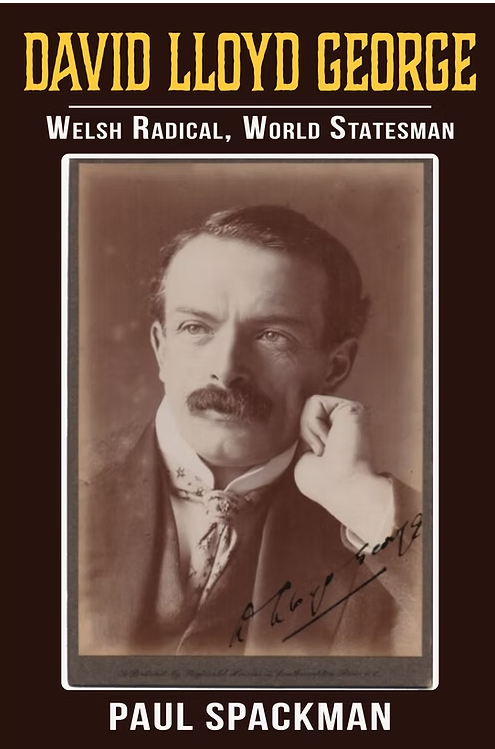
Thank you to Paul for answering our questions. David Lloyd George – Welsh Radical, World Statesman, is published by Barnthorn and is available from the publisher and all good booksellers.
Lloyd George’s most recent biographers, Paul Spackman and Damian Collins, will be in conversation together in the New Year. The event will take place at the National Liberal Club, as part of the Liberal Democrat History Group’s AGM and will be co-sponsored by the Lloyd George Society. Date to be confirmed soon.